Last year, our cat Biscuit got hit by a car and had to have a serious operation on his leg. The vet instructed us to rent a cage and keep him in it to aid his recovery. We did as we were told but poor Biscuit was furious. He kicked his litter out, tipped his food bowl over and complained like mad, crying pitifully until someone let him out for a cuddle.
This pattern continued for four days, until we finally released him from the cage but still kept him confined to a bedroom. The scratch marks on the door and his speed of escape every time we opened the door were clear evidence of the frustration of confinement for this previously free spirit.
Whilst talking with one of my clients this week, we started discussing the implications of captivity, and how most of us would feel after a few weeks of social isolation. We most likely won’t be throwing our food around or scratching at the doors, but what will our responses be? How will we cope with the emotions that arise from the removal of our full choice and freedom?
In times of stress, when we are trying to survive, we get into the classic fight or flight response. Our ‘thinking’ brain – the Pre-frontal cortex – has been triggered and sends blood away from the brain to the body, to focus on keeping us safe. This allows us small immediate choices, but we lose the capacity for long-term thinking. In fact, neuroscientists believe we lose about 20% of our IQ at these times; our brains are super sharp and alert for danger but foggy to any other type of thinking. It’s not surprising that people are feeling this way; with Covid19 doing its damage around the world, and the daily shifts and changes to our safety and wellbeing, we are exhausting our adrenal glands, and overworking our pre-frontal cortex.
So, what can we do to manage our state while in captivity?
- Talk it out – Naming how you are actually feeling requires the pre-frontal cortex to drag itself back to life; it has to engage in thinking and is distracted from the ‘felt’ danger and focusing back on the current state.
- Hold your head! Your hand is electromagnetic: place it on your forehead (like we often do when we are trying to puzzle something out) for a few minutes and it attracts the blood back to the brain which interrupts the fight or flight response.
- Exercise – Movement helps to break down stress hormones in the body and gives us increased endorphins – the feel-good hormones – that’s why the cat wanted to run around not sit still.
- Reality – Work out what hasn’t changed, versus what has changed. Lots of areas in your life are likely to still be stable – your family, home and personal values for example – whereas your freedom, physical contact with friends, and potentially your job, have.
- Breathe – When we are in fight or flight, our breathing becomes shallower. Learning how to breathe effectively can calm down the stress response. One study took 100 CEOs and taught them to do 5 minutes of proper breathing when they felt stressed – the results showed a 40% drop in the stress hormone cortisol.
- Mindfulness – very much on trend! This is about learning to stay in the present moment and being curious about the emotions and reactions we are having so we can choose to respond rather than be triggered to react.
- Laughter and Love – Most of us will miss the human contact we are used to: socialising with friends, hugging relatives, spontaneous chats while shopping – we need to replace these in a slightly forced way using technology to help us where possible. Schedule in calls and contact with loved ones, hang out as a family, play games or quizzes online, play in a different way. All these will increase our endorphins and allow us to feel more in control.
Nikki Watkins
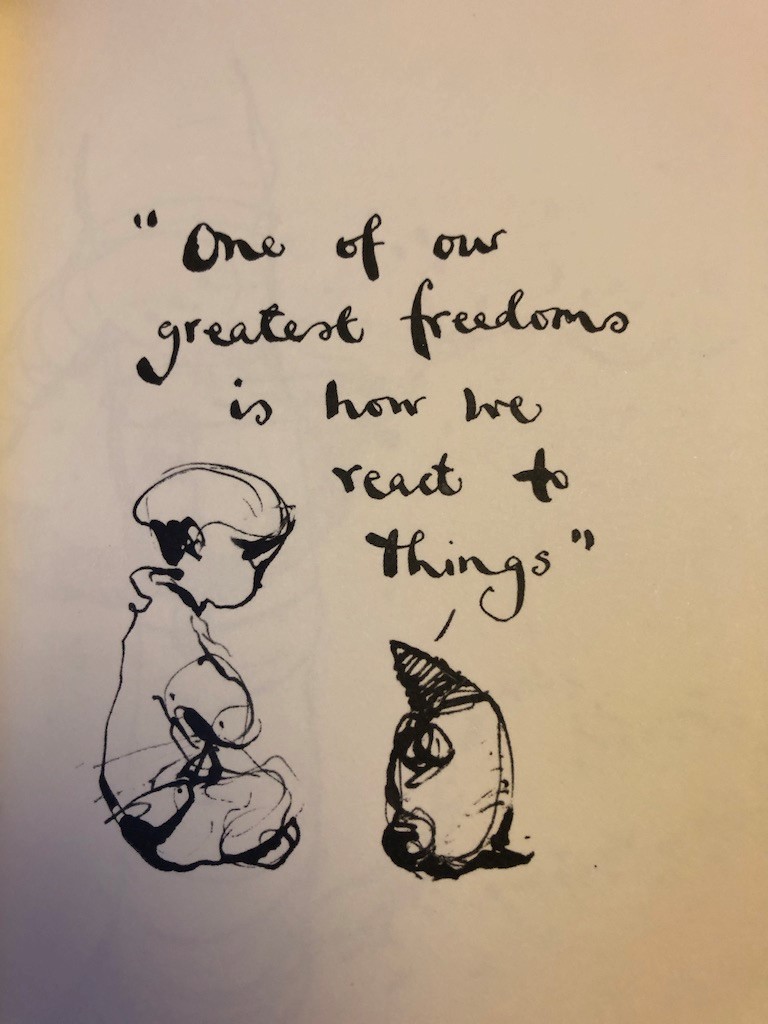
“Everything can be taken from a man but one thing: the last of the human freedoms — to choose one’s attitude in any given set of circumstances, to choose one’s own way.”
Victor Frankl Man’s Search for Meaning
This article was first published on Nikki’s LinkedIn page on March 26th 2020.